

As the demand for smart devices and edge computing continues to grow, the need for lightweight operating systems (OS) tailored for IoT and embedded systems is more crucial than ever. These compact, efficient OS options are designed to work within strict resource constraints—limited memory, low processing power, and real-time responsiveness.
Below, we explore the best lightweight operating systems for IoT in 2025, helping developers make informed choices for their next smart device project.
🔧 Why Lightweight Operating Systems Matter in IoT
For IoT devices, heavy OS platforms are simply not practical. Most IoT systems require:
- Low power consumption
- Minimal storage and RAM usage
- Real-time processing
- Modular architecture for hardware abstraction
Thus, the right OS should not only be small but also highly reliable and scalable.
🧠 1. FreeRTOS — The Go-To Real-Time Kernel
FreeRTOS is one of the most trusted and widely used real-time operating systems in the IoT ecosystem.
Key Features:
- Developed and maintained by Amazon Web Services (AWS)
- Supports 100+ microcontroller architectures
- Provides deterministic real-time behavior
- Integrated with AWS IoT Core for seamless cloud connectivity
🔗 Learn more from the official site: https://www.freertos.org/
Best suited for: Industrial IoT, wearables, automotive sensors.
🌿 2. TinyOS — The Minimalistic Powerhouse
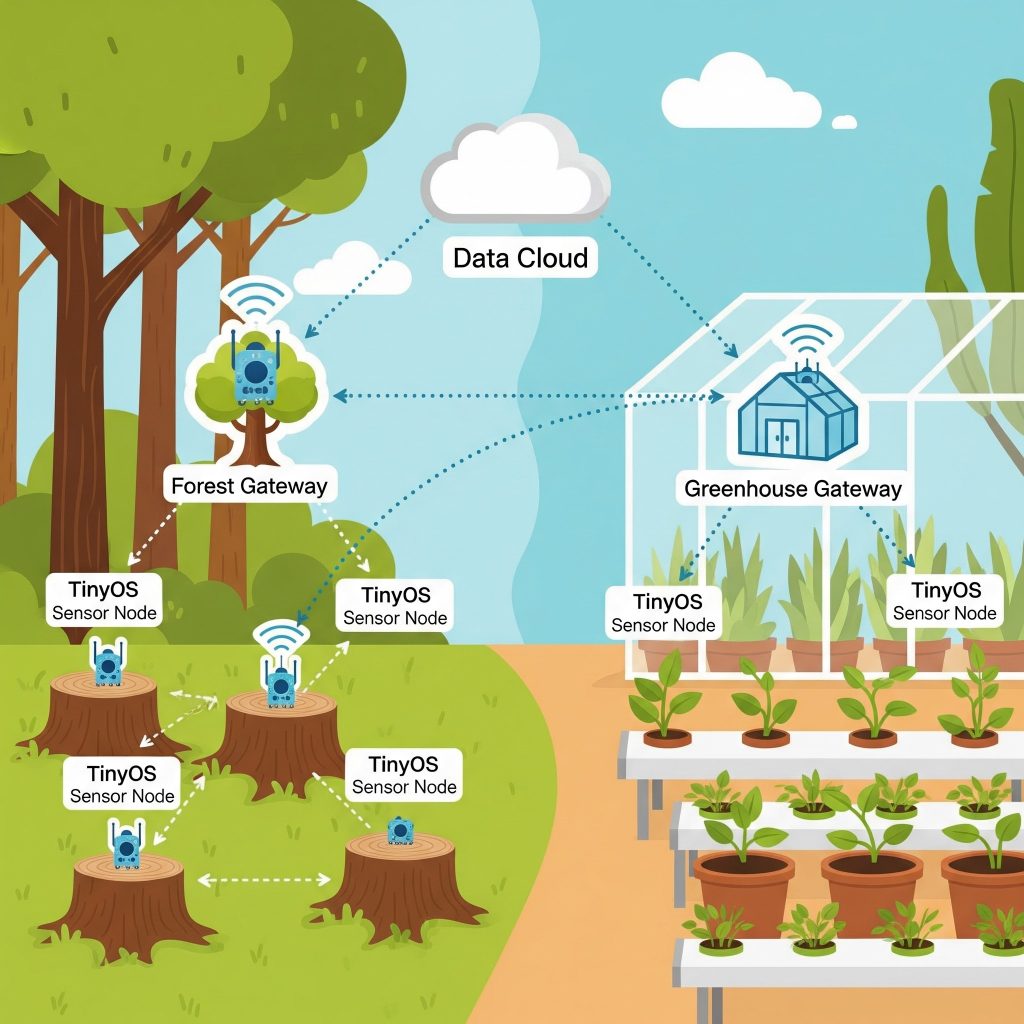
TinyOS is a highly modular OS built specifically for low-power wireless devices.
Key Features:
- Uses the NesC language, optimized for embedded systems
- Extremely lightweight footprint
- Best for wireless sensor networks (WSNs) and smart agriculture
Best suited for: Sensor networks, remote monitoring, scientific research.
🌊 3. Contiki-NG — Networking-Friendly OS
Originally built for IPv6 and 6LoWPAN communications, Contiki-NG (Next Generation) is ideal for networked embedded systems.
Key Features:
- Built-in support for CoAP, MQTT, and IPv6 protocols
- Simulates nodes using Cooja Simulator
- Active community & regular updates
Best suited for: Smart city networks, home automation, mesh-based IoT systems.
🚀 4. Zephyr OS — Feature-Rich Yet Lightweight
Backed by the Linux Foundation, Zephyr OS is modular, open-source, and supports a wide range of hardware platforms.
Key Features:
- Built on a small-footprint microkernel
- Includes drivers for Bluetooth, Wi-Fi, USB, and more
- Compatible with Arm, Intel, RISC-V and more
Best suited for: Consumer electronics, health wearables, industrial sensors.
⚙️ 5. RIOT OS — Real-Time and IoT-Centric
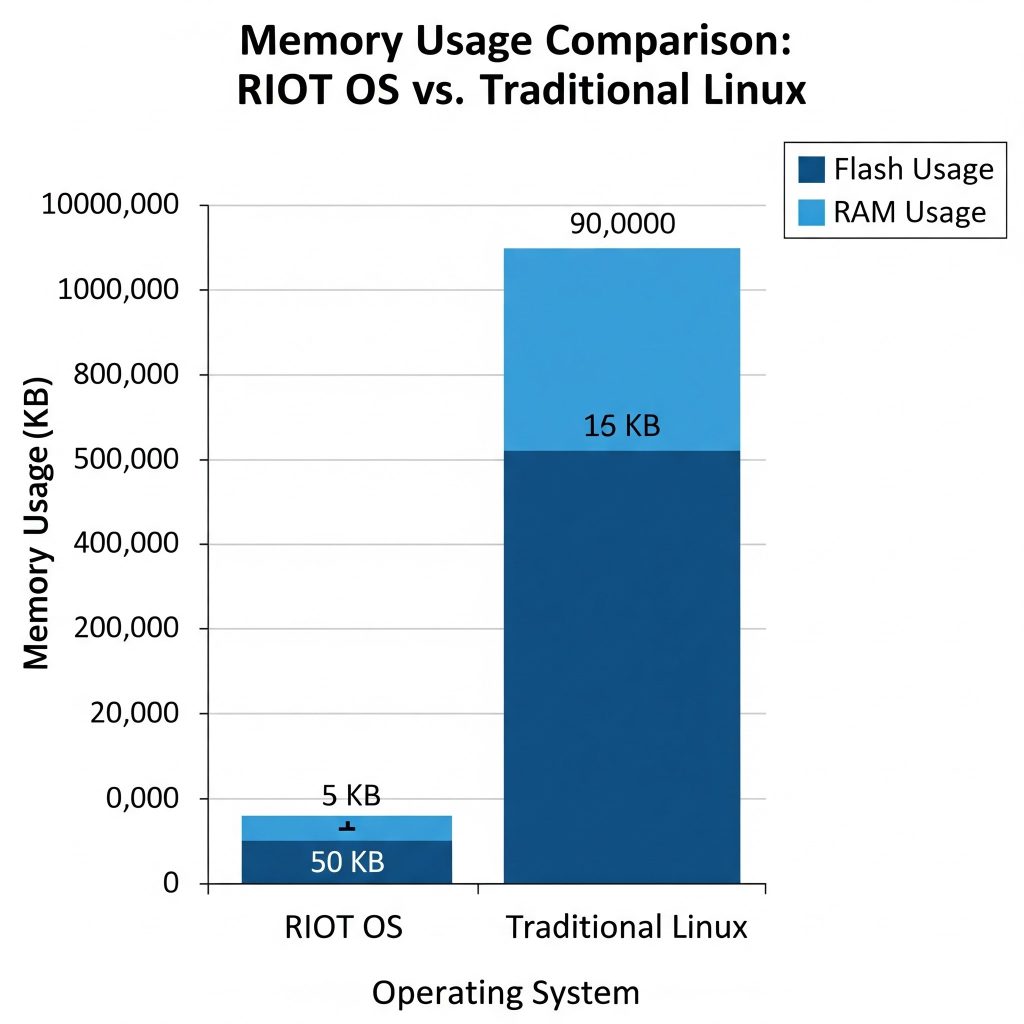
RIOT OS offers a developer-friendly environment with multi-threading, real-time capabilities, and a Unix-like shell.
Key Features:
- Supports C and C++
- Works on 32-bit, 16-bit, and 8-bit platforms
- Fully open-source with active GitHub contributions
🔗 Check out: https://www.riot-os.org/
Best suited for: Research, academic projects, customizable embedded applications.
🔗 Read: “What is Edge Computing? Use Cases & Benefits”
📌 Final Thoughts: Choose the OS that Fits Your Use Case
To sum up, selecting the right lightweight OS for your IoT device in 2025 depends on your device’s power capacity, connectivity needs, and real-time performance. While FreeRTOS excels in industry-grade reliability, options like TinyOS and Contiki-NG provide tailored solutions for niche applications like smart farming and city infrastructure.
✨ Always consider:
- Memory & storage limits
- Required communication protocols
- Hardware compatibility
- Community and support