

WebAssembly in 2025 is transforming how high-performance applications run in web browsers. It has evolved from a niche technology to a mainstream tool that empowers developers to build fast, secure, and cross-platform web applications.
🔍 What is WebAssembly?
WebAssembly is a low-level binary instruction format that allows code written in languages like C, C++, and Rust to run in modern browsers. Unlike JavaScript, which is interpreted, WebAssembly is compiled — meaning it executes at near-native speed.
✅ Key Advantage: It is ideal for performance-heavy applications such as gaming, video editing, real-time data visualization, and AI operations.
🌐 Why WebAssembly Matters in 2025
⚙️ The Demand for Speed in WebAssembly in 2025
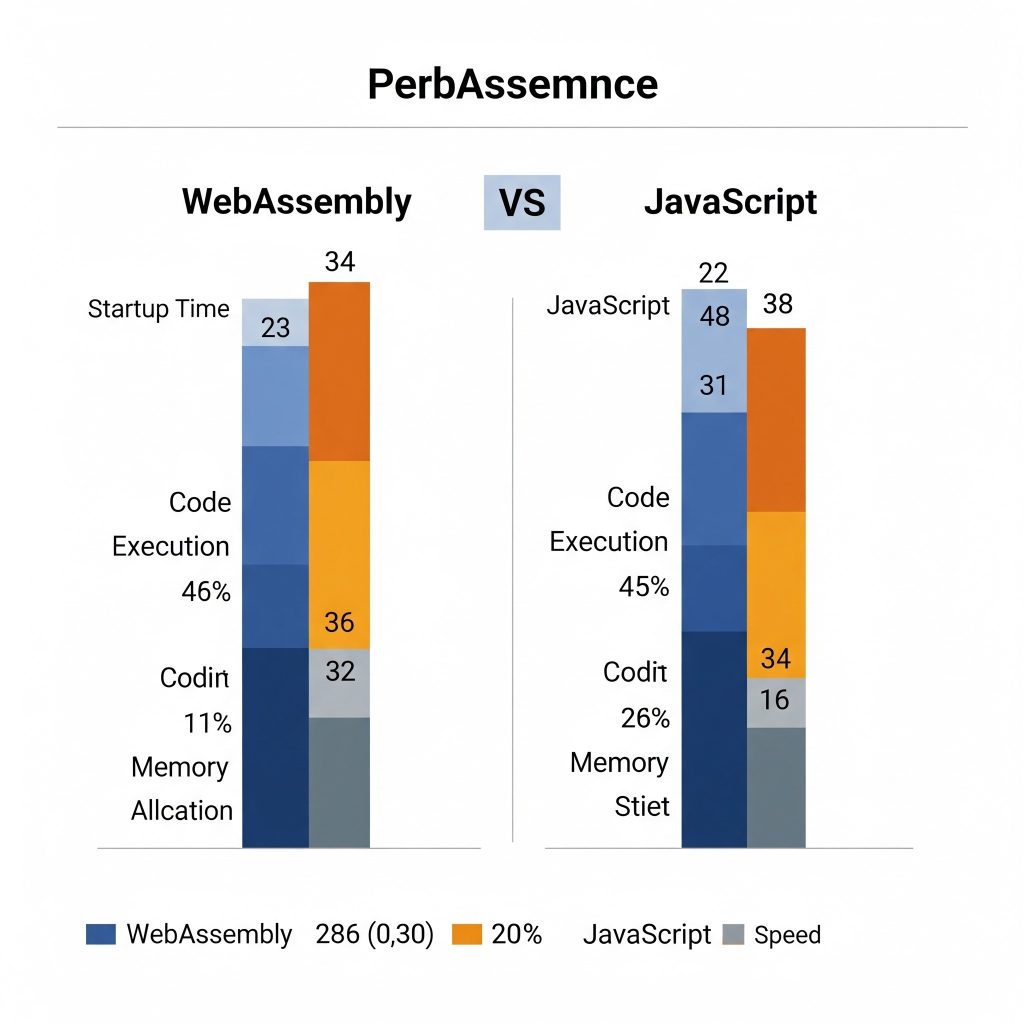
As modern applications grow more complex, JavaScript often falls short in delivering the performance users demand. WebAssembly in 2025 provides a way to handle these intensive workloads efficiently.
🔁 Multi-Language Flexibility of WebAssembly in 2025
This year, developers can compile Rust, Go, C++, and even Python into WebAssembly modules — giving teams language freedom without needing to re-engineer their architecture.
🔒 Security Benefits of Using WebAssembly in 2025
Because WebAssembly in 2025 runs in a sandboxed environment, it adds an additional layer of protection, reducing potential exposure to attacks common in native execution.

🛠️ How WebAssembly Works: Under the Hood
Compilation Process
Code written in a high-level language is compiled into .wasm binary format using tools like:
- Emscripten (for C/C++)
- Rust’s
wasm-pack - AssemblyScript
Once compiled, the module is imported and executed in the browser using JavaScript or other runtime environments.
Integration with JavaScript
WebAssembly doesn’t replace JavaScript — instead, it complements it. For example, you can run CPU-intensive tasks in WebAssembly while handling UI in JavaScript.
📈 Use Cases of WebAssembly in 2025
🎮 1. Gaming and Game Engines
Frameworks like Unity and Unreal Engine now support exporting to WebAssembly, enabling rich 3D browser games.
📊 2. Data Visualization & FinTech
Heavy computations for graphs, charts, or analytics now benefit from WebAssembly’s speed in rendering and calculations.
🎥 3. Video & Audio Processing
Video editors and audio tools in the browser, like FFMPEG-based applications, are gaining massive traction due to WebAssembly.
🧠 4. Machine Learning
WebAssembly can now run ML models faster with tools like ONNX.js and TensorFlow Lite compiled to .wasm.
🧩 Tools and Frameworks Supporting WebAssembly in 2025
- Rust – Widely adopted for Wasm due to performance and memory safety
- Blazor – Microsoft’s framework that allows C# to run in the browser via Wasm
- AssemblyScript – TypeScript-to-Wasm compiler for JavaScript developers
- WasmEdge – A fast, lightweight WebAssembly runtime for cloud-native environments
🔗 Top Programming Languages to Learn in 2025
🚀 Benefits of Using WebAssembly in Modern Development
- ✅ Near-native performance
- ✅ Reduced JavaScript bottlenecks
- ✅ Multi-language support
- ✅ Lightweight modules
- ✅ Enhanced security architecture
⚠️ Challenges and Limitations in 2025
Although WebAssembly has evolved, it still faces:
- ❌ Limited direct DOM access (needs JavaScript glue code)
- ❌ Debugging is still tricky compared to JavaScript
- ❌ Larger initial load times for Wasm modules
Yet, these challenges are being addressed with new APIs like the Component Model and Interface Types.
🔮 The Future of WebAssembly Beyond 2025
WebAssembly is quickly expanding into:
- Edge Computing: Using Wasm on CDN edge locations for ultra-low latency.
- Serverless Functions: Deploy lightweight Wasm modules using platforms like Cloudflare Workers or WasmEdge.
- Desktop and IoT apps: Cross-platform compatibility makes it ideal for embedded systems.
📝 Final Thoughts
In summary, WebAssembly is not just a buzzword in 2025 — it’s a powerful, production-ready technology changing how web applications are built. From fintech to gaming, it’s enabling new levels of performance and cross-platform development that JavaScript alone can’t provide.