

Introduction: The Future is Local with Edge AI and On-Device ML
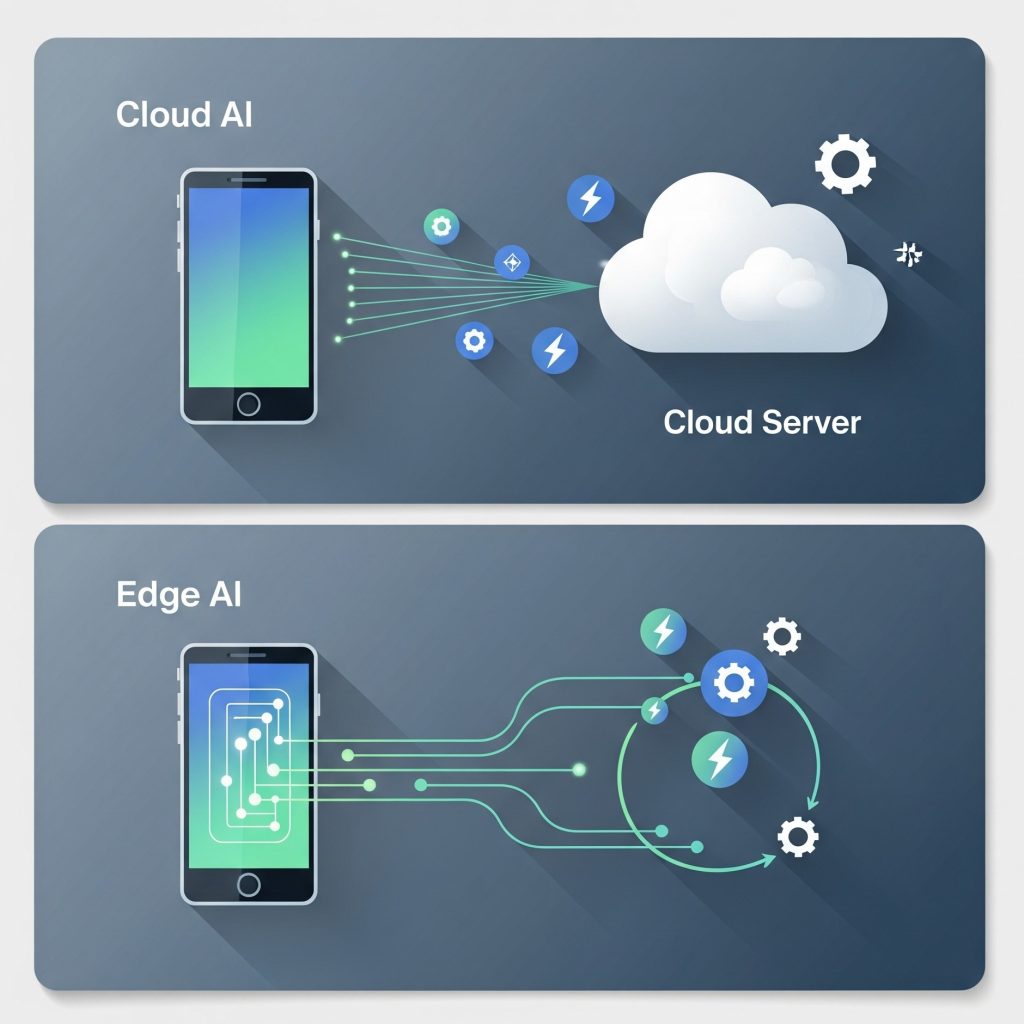
As Artificial Intelligence continues to shape our digital world, there’s a growing shift from cloud-based systems to Edge AI and On-Device Machine Learning. Instead of sending data to the cloud for processing, edge AI brings the intelligence closer to the source — your device.
This not only enhances speed and real-time decision-making, but also reinforces privacy and security, especially critical in the age of data breaches and cyberattacks.
🔍 What is Edge AI and On-Device ML?
✅ Edge AI:
Edge AI refers to AI algorithms running locally on hardware devices, such as smartphones, wearables, industrial machines, or IoT devices — without needing to send data to a centralized cloud.
✅ On-Device Machine Learning:
This means models are trained, optimized, and deployed directly on user devices. It reduces latency, protects privacy, and works even without internet connectivity.
🔗 Read more on AI Trends in Software Development
⚙️ Why Developers are Moving Toward Edge AI & On-Device ML
⏱️ 1. Speed & Real-Time Processing
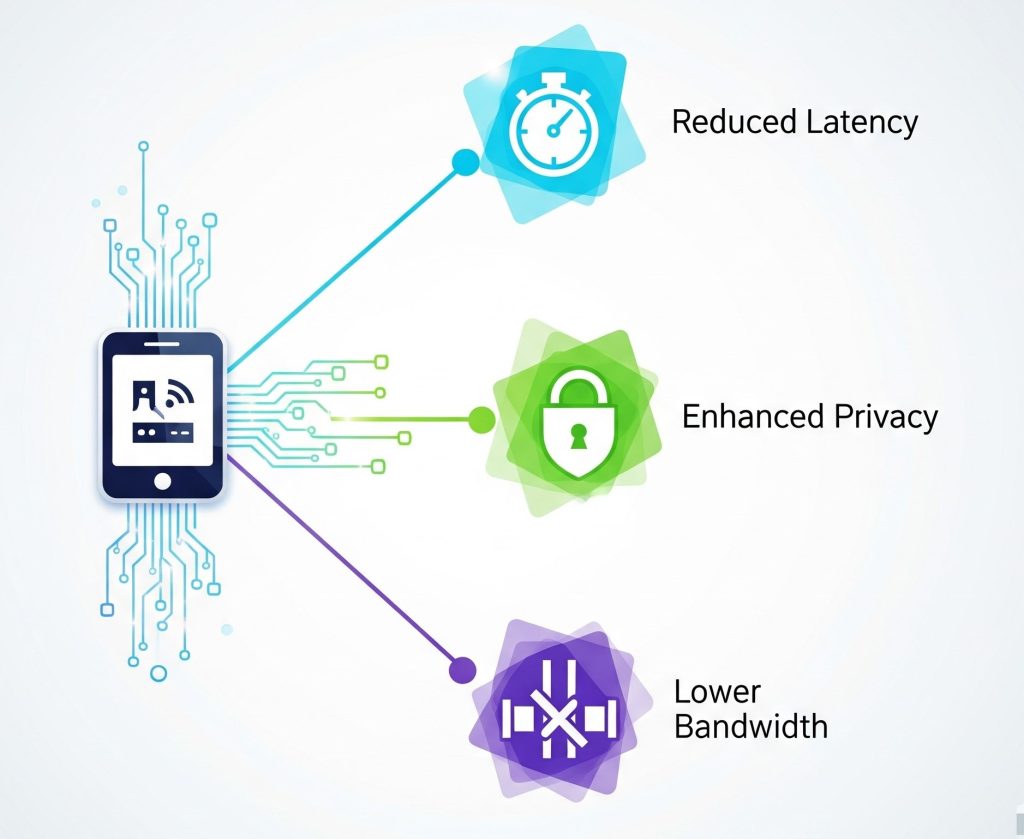
- Since data doesn’t travel back and forth to the cloud, the response time is significantly faster.
- Ideal for real-time tasks like facial recognition, voice assistants, and autonomous driving.
🔐 2. Enhanced Privacy & Data Security
- Data remains on the device, ensuring personal information isn’t exposed to potential cloud vulnerabilities.
- This is crucial for applications in healthcare, finance, and personal devices.
🌐 3. Offline Functionality
- Apps can function without internet, which is beneficial in remote areas or during outages.
💸 4. Cost Efficiency
- Saves bandwidth and cloud computing costs by processing data locally.
📱 H2: Real-World Applications of Edge AI and On-Device ML
🎤 1. Voice Assistants
Technologies like Apple’s Siri and Google Assistant increasingly process voice data locally, offering quicker and safer responses.
👁️ 2. Computer Vision
Edge AI powers real-time object detection in drones, security cameras, and AR applications.
🏥 3. Healthcare Devices
Wearables like smartwatches detect heart rate anomalies or oxygen levels in real-time using embedded ML.
🚗 4. Autonomous Vehicles
Self-driving cars rely on edge AI for instant decision-making while navigating traffic.
🛠️ Tools and Frameworks for Edge AI Development
🧰 Popular Frameworks
- TensorFlow Lite – Optimized for mobile and embedded devices.
- Core ML (by Apple) – For on-device ML models in iOS apps.
- PyTorch Mobile – Lightweight, suitable for Android and iOS.
- Edge Impulse – Perfect for edge ML with microcontrollers and small devices.
🔄 Model Optimization Techniques
- Quantization: Reduces model size and increases speed.
- Pruning: Removes unnecessary weights from models.
- Knowledge Distillation: Trains smaller models to mimic larger ones.
🧩 Challenges of Edge AI & On-Device ML
⚖️ 1. Limited Hardware Resources
Devices have low memory, processing power, and battery, making optimization essential.
📦 2. Model Compression Complexity
Developers must sacrifice model accuracy for size and performance in many cases.
🔁 3. Frequent Updates
Updating models across thousands of devices is a logistical challenge.
🚀 What the Future Holds
Edge AI and On-Device ML are not just technical trends — they represent a paradigm shift in how we build software, protect user privacy, and achieve real-time performance. As hardware becomes more capable, expect to see more advanced applications running at the edge, from smart homes to industrial robots.
🔗 How AI is Revolutionizing Business
📌 Conclusion: Program Smart, Program Secure
Incorporating Edge AI and On-Device ML into your tech stack not only enhances performance but also builds trust through privacy-focused design. Whether you’re building a health tracker or an AI camera, the future of smart, private, and fast applications starts at the edge.